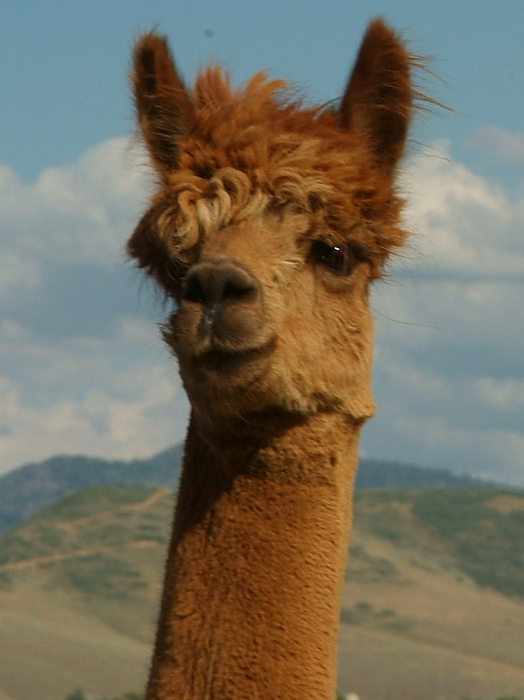
The alpaca is a member of the camelid family and originated as a high altitude, cold climate animal which developed a coat with microscopic air pockets in its fibers to protect it from the Andean winter extremes. These tiny air pockets inside the fibers create an extraordinary amount of insulation for the alpaca; an insulation which is retained in the yarns and make it perfect for warm winter clothing. Alpaca has 7 times the warmth of wool and 12 times the strength so clothing made from it is protective, easy to care for and can last for generations.
Alpaca
Alpaca yarn is strong and resilient while still being soft and comfortable for wearing next to the skin. Superfine and Baby Alpaca yarns rival cashmere for their luxurious softness but are far more durable which makes them an ideal choice for Pussy Caps.
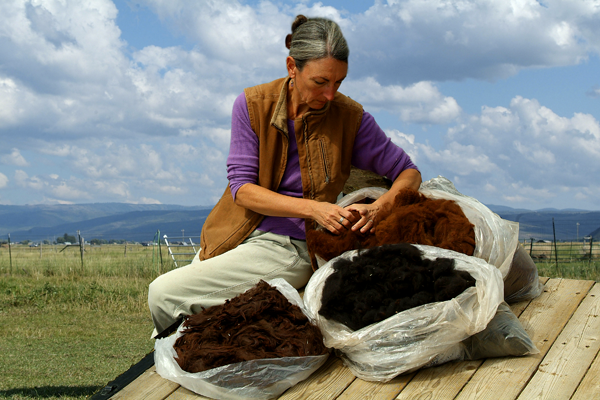
There are 22 different natural colors of alpaca fiber ranging from black on up to a snowy white with the greys and tans being especially rich and beautiful. Some of the shades of alpaca are so unique that they aren't found in any other natural animal fiber.
Alpaca is one of my favorite yarns to work with - it fairly glides through the hook and my hands as if it were liquid. In the world of fibers and yarns when we talk about how a yarn feels we refer to its "hand." And there is nothing that has a hand quite like Alpaca. The two words that always come to mind when I think of alpaca are soft and smooth.
If you're like most people you can't wear wool next to your skin. Alpaca is so soft however you probably won't want anything between it and your skin.
In ancient Peru it was not unusual for alpaca garments to be itemized in wills. Will your alpaca Pussy Cap be left to someone special or will you take it with you when you go?
Alpaca contains no lanolin. This means it is hypoallergenic to most people. High-grade alpaca such as "Baby Alpaca" has a low prickle factor, meaning it does not feel itchy and most people can comfortably wear pure alpaca next to their skin.
Alpaca fiber is naturally water resistant. The absorption of environmental humidity is low.
The structure of the alpaca fiber makes it behave as an insulator. Alpaca contains microscopic air pockets, which creates lightweight clothing with good insulating values.
Softness (hand): Alpaca fiber is silky, soft, supple and smooth to the touch. It is prized for its unique silky feel and luxurious handle.
Alpaca fabric has an excellent drape, appearance and touch.
Alpaca is the only animal that produces up to 22 natural colors, which can be blended into over 200 natural shades. It is easily dyed any color and always retains its natural luster.
Alpaca fiber is resilient and has very good elasticity or memory, making it a favorable choice for blending with other fibers.
Alpaca fiber is stronger than sheeps wool. "In respect to strength the Huacaya variety stretches a longer distance before reaching the breaking point than the Suri fiber and both the Huacaya and Suri have greater strength than sheep fiber." [Animal Breeding and Production of American Camelids - by Rigoberto Calle Escobar.]
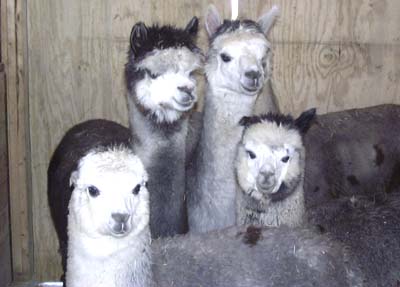
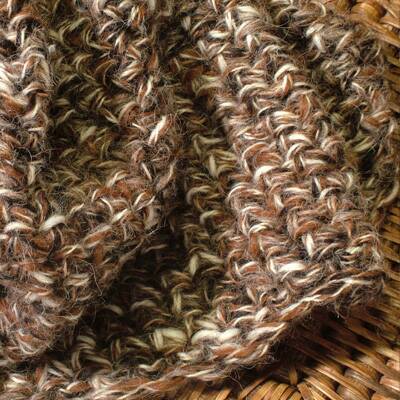
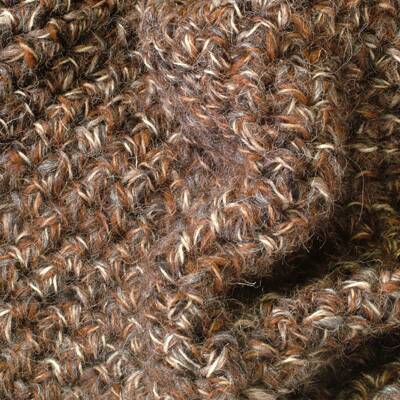
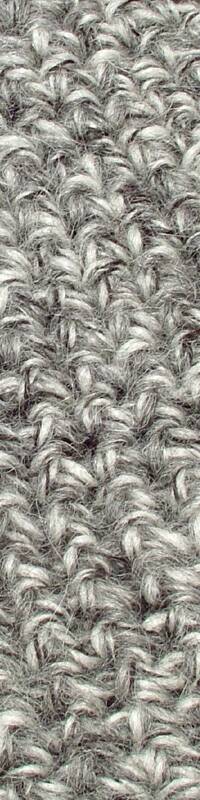
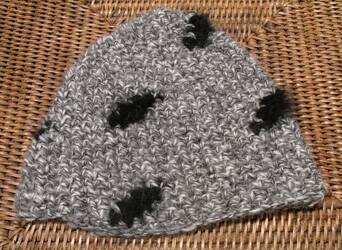
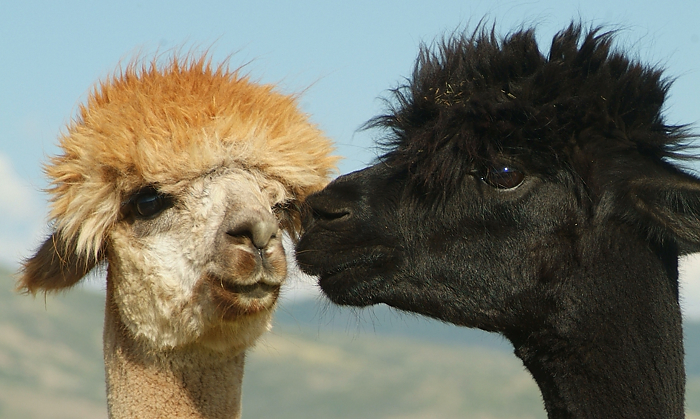
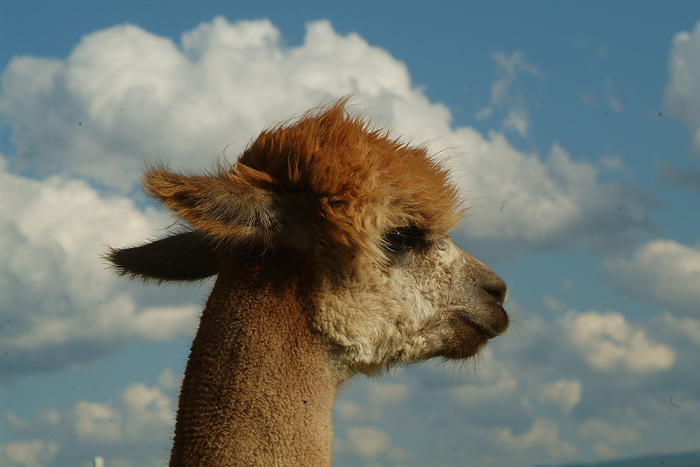
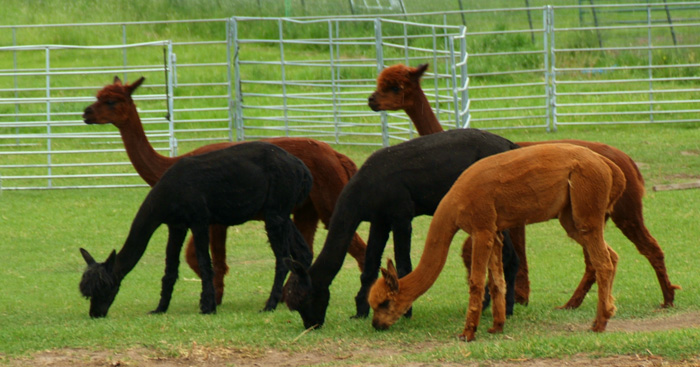
Here's a Pussy Cap made from natural black, silver grey & white alpaca fibers that came from animals similiar to those above.
This is the superfine grade of Peruvian alpaca, an ideal choice for next to the skin comfort.
There are approximately five different grades of alpaca fibers depending on who's doing the grading. Criteria varies slightly from country to country and from mill to mill. The only two grades of alpaca yarns I use are baby and superfine. Standard and coarse grades aren't soft enough for wearing next to the skin whereas royal baby alpaca, which has a softness comparable to that of cashmere, is usually not available on the open market because most of it is sold to European couture houses.
ROYAL BABY ALPACA 20 microns or less
*BABY ALPACA 20 - 23 microns
*SUPERFINE ALPACA 23 - 25 microns
STANDARD ALPACA 25 - 28 microns
COARSE ALPACA 29 - 35 microns
Microns are a standard of measurement that refer to the diameter of an individual fiber. The smaller the micron the softer the fiber is considered to be. That said however, the smoothness of a fiber's outer layer also has a lot to do with its softness. Alpaca is an unusually smooth fiber and therefore ideal for next to the skin comfort.
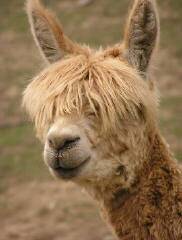
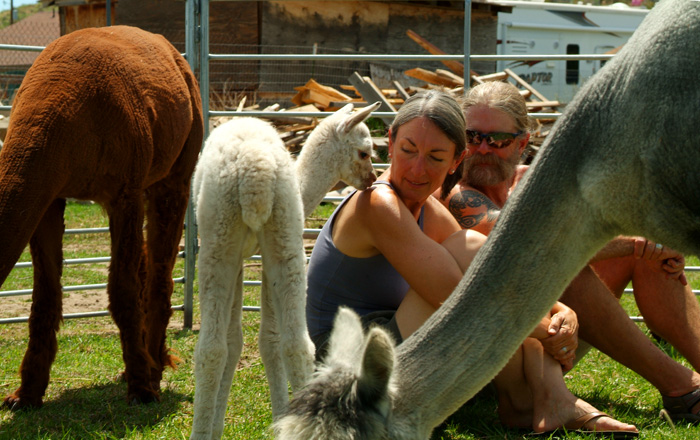
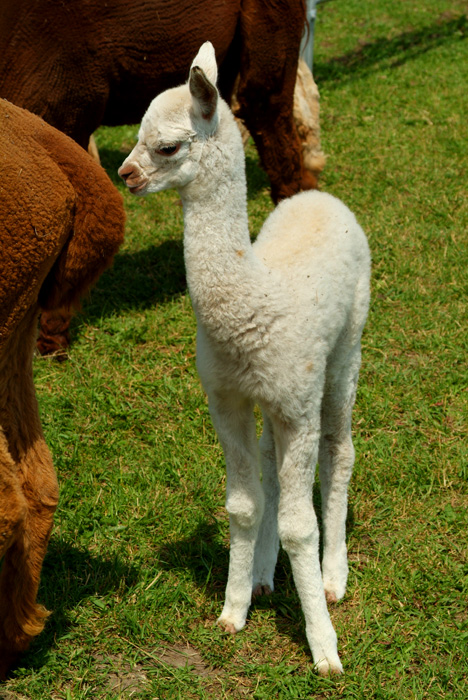
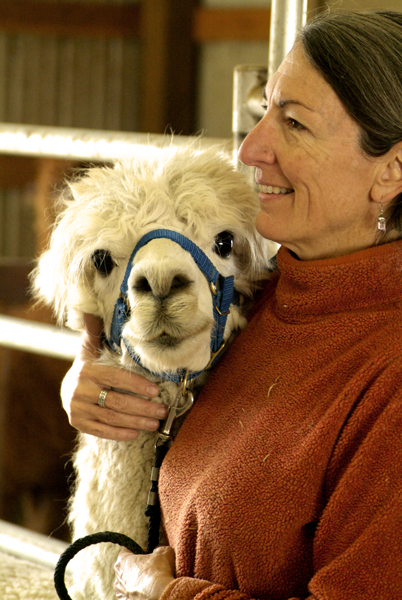
Deb McMurtrie and Jim Martin with their newborn cria Sirona. Jim and Deb are the owners of Sunrise Ranch in Kamas, Utah and a source for some of my very nicest alpaca yarns. Featured throughout this page are pictures I've taken of Jim and Deb and their herd of alpacas on the ranch.