Just the mention of the word cashmere will bring a smile to anybody’s face who’s ever worn it. Cashmere’s softness, durability and lightweight warmth is legendary and clothing made from it has been the choice of royalty and the privileged since ancient times. Increasing worldwide numbers of the goats who produce cashmere fibers have made it more available and as a result more affordable to more people.
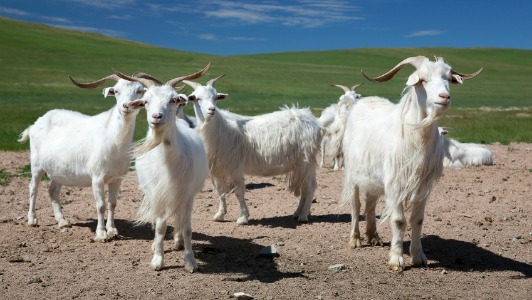
Cashmere derives its name from the region of Kashmir in northern India and southern Pakistan where the fiber was first collected and spun into yarns. Cashmere isn’t a breed of goat but rather the name for the downy undercoat that comes from the various kinds of goats who produce it. These goats are often referred to collectively as cashmere goats while maintaining their distinctive breed names.
Inner Mongolian cashmere goats now divide into five strains: the Alasan (Alashanzuoqi), Arbus and Erlangshan breeds, all of which grow the finest cashmere fibers.
More interesting information about Mongolian Cashmere goats is here.